
Build an AI-Ready Knowledge Base Around Ownership
Reliable answers start with maintained source material and clear responsibility for keeping it current.
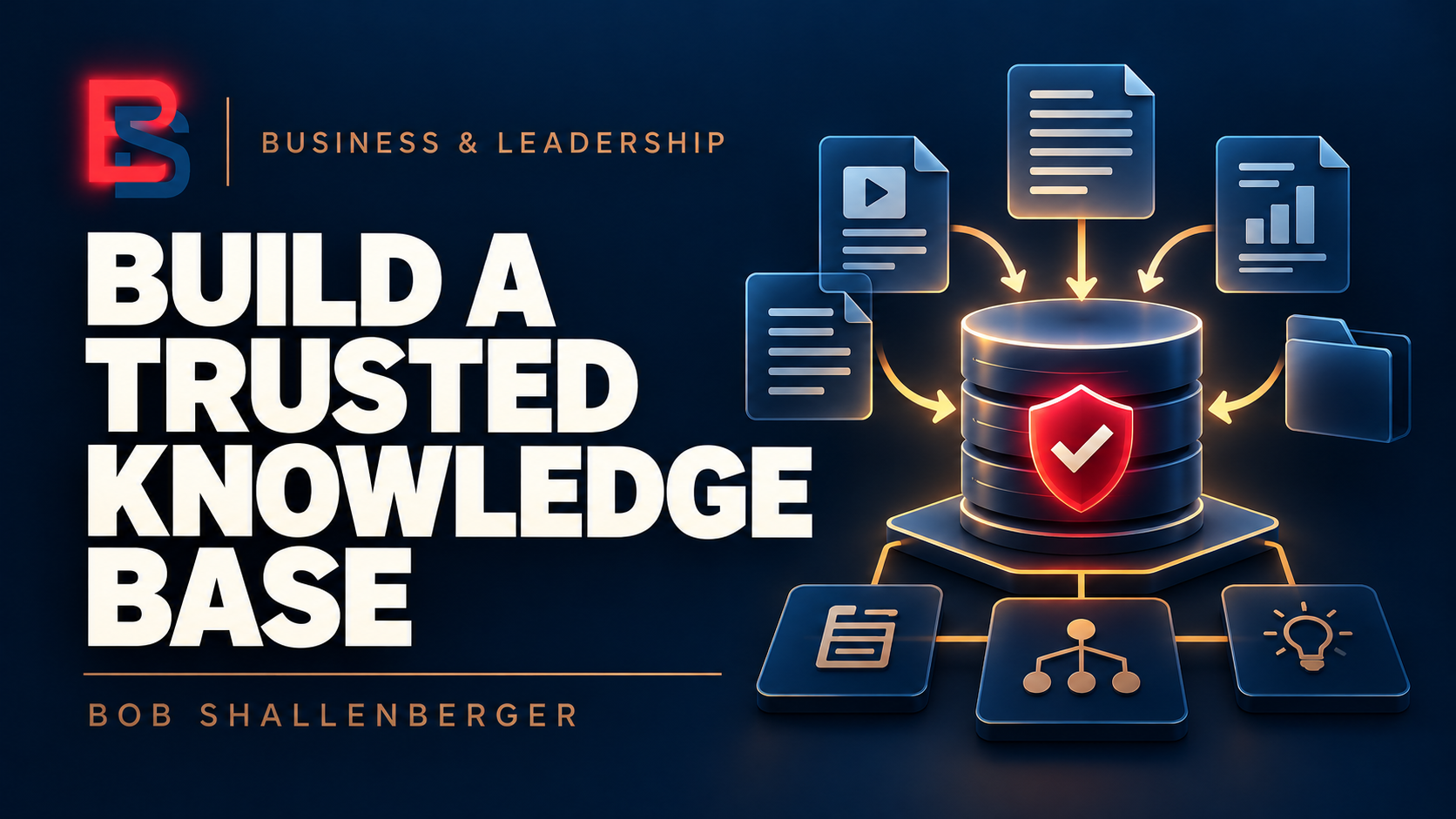
A knowledge base can contain a large amount of information and still be difficult to trust. Different pages may describe the same process in different ways. A useful exception may exist only in someone's notes. An old document may remain easier to find than the current one. Adding AI to this collection does not remove those problems. Before relying on generated answers, establish who owns the information and how the team recognizes an authoritative source.
Choose a bounded subject to organize first. A single service, internal process, or recurring customer question is easier to maintain than an attempt to capture the whole business at once. Identify the people who use the information and the decisions they make with it. Their questions should shape the structure. A knowledge base organized only around the departments that produced documents may force readers to understand the organization before they can find an answer.
Assign an owner to each important area. Ownership means more than being the person who uploaded a file. The owner should be responsible for checking accuracy, resolving conflicting versions, and arranging updates when the underlying work changes. The owner does not need to write every sentence, but someone must be accountable for deciding which explanation is current. Without that role, maintenance becomes a shared intention that no one has time to carry out.
Make the status of information visible. Include a review date, a version or revision marker where useful, and a clear distinction between approved guidance and working drafts. Archive obsolete material in a way that prevents it from appearing as current guidance. Preserve history where the business needs it, but avoid leaving several equally prominent answers with no explanation of which one applies. Readers and tools both benefit from unambiguous source boundaries.
Write answers with enough context to be understood outside the original conversation. Define the situation, the standard approach, relevant exceptions, and where to go when the standard approach does not fit. Short sections with descriptive headings can be more useful than a long document that hides several unrelated procedures. Avoid removing important conditions merely to make an answer brief. A concise statement that leaves out its limits can mislead more effectively than a longer one.
Test the material using real questions that authorized users are likely to ask. Check whether the answer can be found, whether the source supports it, and whether the result identifies uncertainty appropriately. Include difficult cases and questions the collection should not answer. When the test fails, determine whether the gap is in the source, the organization of the material, or the proposed answering workflow. Each cause calls for a different correction.
For example, an answer about requesting a service change should identify who may request it, what information is required, who approves it, and where exceptions go. If the approval role changes, the owner should update every affected explanation. A single concise source can then support several forms of communication without forcing each writer to rediscover the procedure. The quality of those later answers depends on the care taken with the original guidance.
Finally, connect maintenance to the business events that change the truth. A service update, process revision, or responsibility change should trigger a review of the relevant guidance. Periodic reviews can catch overlooked issues, but they should not be the only mechanism. A knowledge base becomes dependable through stewardship: named owners, visible authority, usable explanations, and a workable update process. AI can help people navigate that work, but it cannot substitute for deciding what the organization knows.