
Decide What Human Review an AI Task Needs
Match review effort to the consequences of an error and the knowledge required to recognize it.
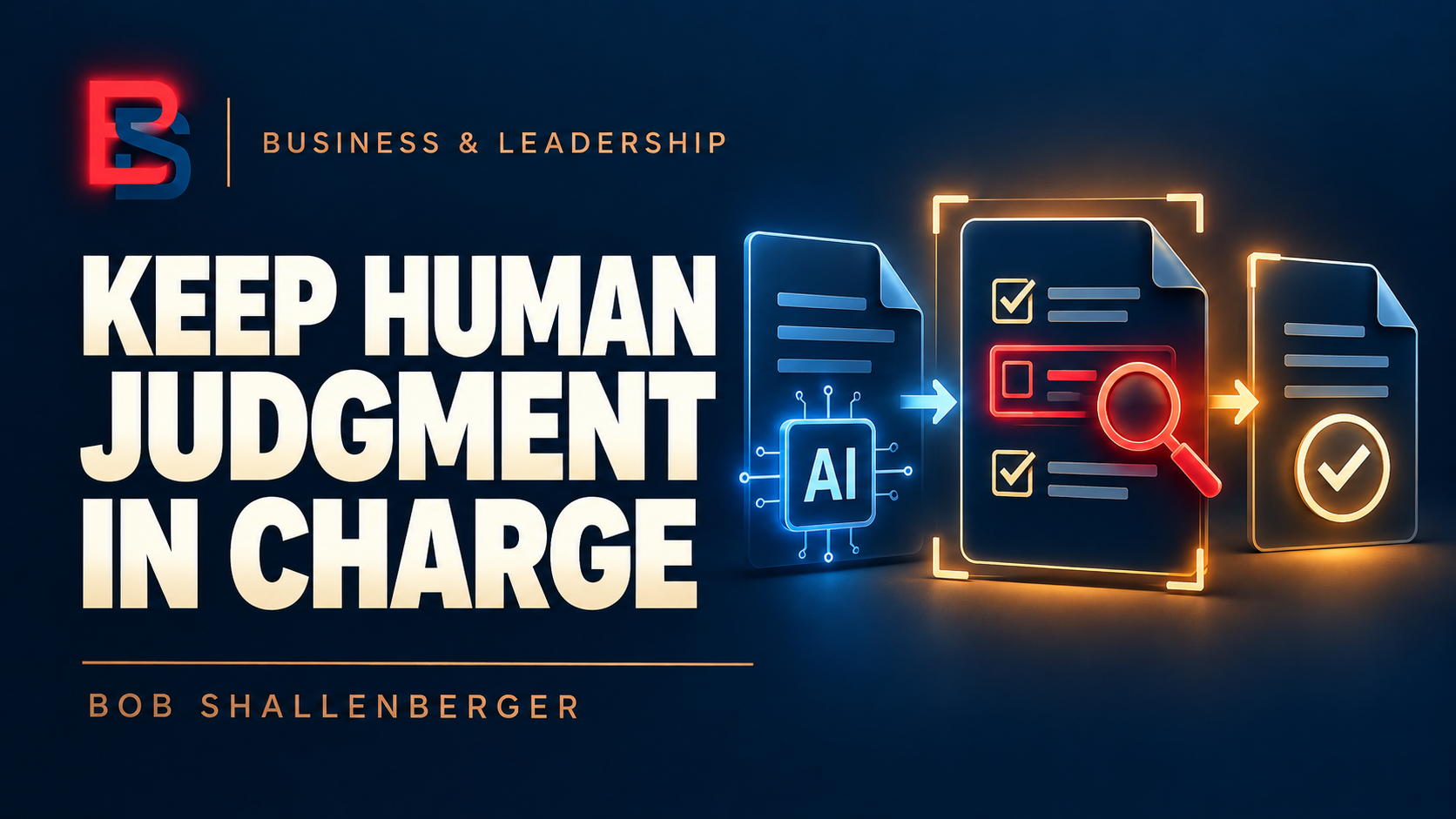
“A human will review it” sounds reassuring, but it does not explain much about how a workflow is controlled. Who is the reviewer? What are they checking? Do they have the knowledge and time to identify a problem? Human review becomes meaningful when it has a defined purpose. The business should decide what needs to be checked and who can check it before treating the step as a safeguard.
Begin with the consequence of an incorrect output. A brainstorming list used privately has a different risk profile from a customer commitment, a public statement, or an operational instruction. Consider who could be affected and how easily an error could be corrected. This assessment does not need to become a complicated scoring system. It should make the reason for the review effort understandable and help the team avoid treating all tasks as equivalent.
Identify the knowledge needed to spot a defect. A skilled writer can improve clarity without being qualified to verify a technical specification. A process owner may confirm the facts but miss a confusing explanation. Some outputs need more than one kind of review. Assign the relevant responsibilities explicitly rather than expecting one person to cover every dimension because they happened to receive the draft first.
Turn broad expectations into observable checks. For a customer update, the reviewer might confirm status, dates, commitments, and tone. For a meeting summary, they might verify decisions, owners, and unresolved questions. For an article, they might check factual support and the distinction between an example and a reported event. A short checklist helps reviewers apply the same standard across similar outputs while leaving room for judgment about unusual cases.
Give the reviewer access to the evidence. Asking someone to approve a summary without the source material can reduce review to a judgment about plausibility. A result may look reasonable while misrepresenting a specific detail. Include the sources or an appropriate way to inspect them, subject to access restrictions. If the reviewer cannot verify a material claim, the workflow should allow them to stop or return the work rather than approve it under pressure.
Define what happens when the review finds a problem. Minor wording changes may stay with the reviewer. Missing facts may return to the source owner. A recurring failure may require revising the assignment or reconsidering the use case. Establish these routes so that review produces a decision rather than a vague concern. Track meaningful recurring defects when doing so will improve the process, without turning every small edit into an administrative burden.
For example, reviewing a proposed technical instruction may require a subject-matter expert to verify the steps and an intended user to check whether the explanation is understandable. Those checks answer different questions. Combining them into a single generic approval can conceal a gap. The workflow should identify both needs, while making one person responsible for confirming that the necessary reviews have been completed before the instruction is put into use.
Periodically check whether the review itself is working. Look at corrected errors, issues discovered after release, and the effort required to complete the checks. If reviewers routinely approve material they cannot assess, the process needs redesign. If a low-consequence task requires disproportionate effort, narrow the requirements or change the workflow. Human review is a practical responsibility, not a phrase to add to a policy. It works when capable people can examine the right evidence and act on what they find.